Retail analysts call community commerce the new operating engine for enterprise retail growth. Customer acquisition costs climb every quarter. Buyer trust in digital advertising continues to slide. Consumer attention scatters across dozens of conflicting feeds. Brands searching for durable revenue now construct sales funnels around active peer networks instead of paid ad campaigns.
Direct selling companies ran this playbook decades ago.
The independent rep network represents community commerce in its original, pure form. An individual develops relationships, recommends products through direct trust, and secures repeat monthly orders because a buyer believes the person, not an automated banner ad. This structure matches what modern venture-backed retail brands spend millions trying to assemble from scratch.
Field research proves what channel operators know from experience. The US Direct Selling Association 2025 Growth and Outlook Study confirmed that long-term channel survival depends on personal service and direct human ties. Distributors who sell within collaborative peer groups stay active longer, log higher order volumes, and protect brand equity during downturns. A 10% lift in repeat customer orders consistently delivers more enterprise lifetime value than a 20% spike in new customer acquisition.
Shared trust drives customer retention. Paid ads cannot touch that loyalty. Your historic advantage slips.
Community commerce in 2026 runs on live video streams, fifteen-second product breakdowns, native social storefronts, and active private channels. TikTok Shop expanded 108% in 2025. United States social commerce revenue will cross $100 billion this year. The modern customer finds the product, reviews demonstrations, and completes payment inside a social feed without visiting a separate corporate homepage.
Direct selling organizations hold the human network. You lack the technical foundation to let that network transact where your buyers spend their evenings.
Software friction kills momentum.
A distributor spends three weeks building credibility with a prospect, goes live on video, shares a cart link, and watches the sale vanish because your web store loads like lead on a mobile browser. The rep earned the order through sweat equity; your software dropped it at the finish line.
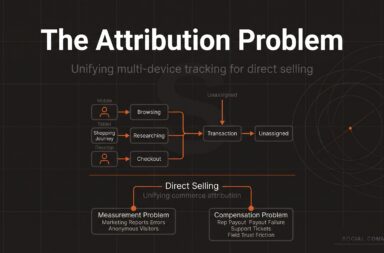
Broken tracking makes the fracture worse. A shopper watches a distributor’s video stream, clicks a link, walks away to cook dinner, and buys the product later from an iPad. If your attribution architecture cannot tie that transaction back to the rep who started the conversation, the sale enters an unassigned corporate ledger.
The seller receives zero credit. Field trust breaks down. Your reps close the sale. Your software loses the money.
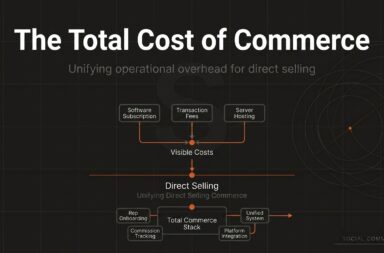
Decades of relationship capital cannot offset an unusable cart. Whether your company converts community trust into top-line revenue in direct selling ecommerce depends on the pipes running underneath the checkout button.
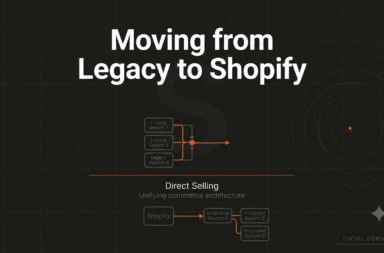
Treat your software stack as the core driver of direct selling commerce, or watch modern social platforms capture the relationships your sales field built for ecommerce for direct sales.