When a company pairs Shopify with flawed architecture, system failures rarely appear on launch day.
The failure appears when a top distributor opens her portal, sees a $0.00 commission balance for a $500 order, and calls field support. Or when new recruit drops out of the signup queue because the enrollment page stalls. Or when internal software developers spend 15 hours a week writing manual scripts to patch data gaps.
Shopify contains zero built-in payout engines, distributor portals, or compensation plan tables. Brands add that capability through custom code, a stack of third-party plugins, or dedicated middleware. Execution quality varies across the channel.
Four specific operational points break when infrastructure design fails:
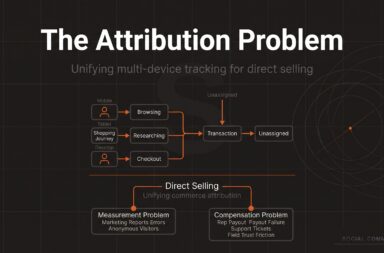
- Attribution and Tracking: Commission tracking fails when browser cookies drop a distributor referral link during checkout. The distributor loses a $45 payout, slams her laptop shut, and stops bringing new buyers.
- Payout Timing and Data Reconciliation: Customer orders clear in Shopify in two seconds, but compensation records lag by 48 hours in the back office. Accounting staff has to reconcile conflicting CSV files manually.
- Subscription and Recurring Billing Sync: Subscription engines run on separate schedules from primary commission software. Unsynchronized recurring orders generate recurring accounting errors, which increases distributor turnover.
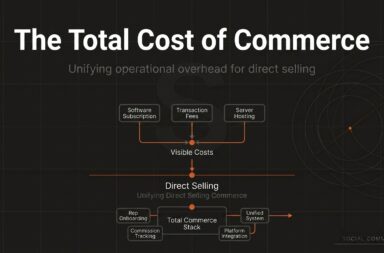
- System Redundancy and Maintenance Overhead: Connecting six standalone applications with custom webhooks creates points of failure. Managing a patchwork setup consumes $10,000 a month in developer hours.
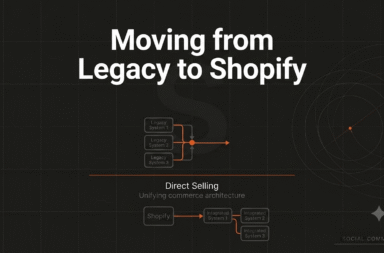
Companies that scale operations treat their storefront and direct selling engine as one unified architecture decision, not two separate software projects to connect later. Brands that isolate these decisions spend years paying for manual data fixes.
Industry analysis shows that direct selling executive teams resolve these operational breakdowns by addressing data management at the structural level.
First, adopting headless architecture separates the storefront presentation layer from complex back-office logic through APIs. This allows customer checkouts to happen instantly without overloading compensation engines.
Second, unifying data pipelines with an enterprise middleware layer gives a single source of truth for order attribution, subscription processing, and commission calculations before data hits financial ledgers.
Third, setting up automated reconciliation protocols between front-end order logs and back-office databases validates payouts in real time, preventing payroll discrepancies and protecting field rep trust.